· By Salman Habib Chaudhry · AI SEO · 6 min read
AI Overview Recovery: How to Recover Traffic After an AI Overviews Drop (2026)
AI Overview recovery playbook: a GSC diagnostic to confirm AI Overviews caused your traffic drop, plus a four-step plan to recover traffic after an AI Overview drop by becoming the cited source.
Want results like this for your business?
Get a free growth audit →If your Google Search Console clicks fell off a cliff in 2026 while your rankings barely moved, AI Overviews are the most likely culprit — and the fix is not “rank harder.” AI Overview recovery is about confirming the cause with a specific GSC diagnostic, then restructuring so you become the source the AI Overview cites rather than the page it replaces. This playbook walks through both. For the broader strategic context first, our AEO and GEO guide covers how AI engines decide what to cite.
AI Overview recovery in one line: To recover traffic after an AI Overview drop, confirm the cause in Search Console (impressions flat or up while clicks fall), re-target the queries AI Overviews can’t fully answer, and restructure your highest-value pages so your brand becomes the source the AI Overview cites. The goal is not to avoid AI Overviews — it is to own the citation slot inside them. Plan for a 60–120 day recovery.
Key Takeaways
- The tell is a divergence: impressions flat or up, clicks down, CTR falling. That pattern points to AI Overviews intercepting the answer — not a ranking loss.
- Informational and how-to queries bleed the most; transactional and “near me” queries are resilient. Re-prioritize accordingly.
- The four-step fix: re-target query effort, restructure for citation, add the schema AI Overviews favour, and win the click back by being the cited source.
- Cited brands earn more clicks, so the recovery goal flips from “avoid AI Overviews” to “be the source inside them.” Plan for a 60–120 day recovery.
How do I confirm AI Overviews caused my traffic drop?
Open Google Search Console, go to the Performance report, and compare a period before and after your drop on two metrics at once: impressions and clicks. The AI Overviews signature is a divergence — impressions hold steady or climb while clicks decline, which pulls your click-through rate down. That means your pages still surface for the query (impressions intact), but the AI-generated answer resolves the user’s question before they click.
Contrast that with a true ranking loss, where impressions and clicks fall together because you’ve slipped down the page. And rule out seasonality by comparing year-over-year, not just month-over-month. The scale of the effect is well documented: Ahrefs’ study on AI Overviews and clicks found a meaningful click-through-rate reduction on queries where an AI Overview appears, and Semrush’s AI Overviews study shows how prevalent these answers have become across query types. Pull your own GSC chart — your first-party impressions-vs-clicks divergence is the strongest evidence you can put in front of a stakeholder.
Which queries get intercepted most?
Not all traffic is equally at risk, so triage before you act. The pattern is consistent:
- High interception: definitional (“what is…”), how-to, simple comparison, and quick-fact queries. AI Overviews can answer these completely, so the click is often unnecessary.
- Low interception: transactional (“pricing”, “buy”, “book”, “hire”), local “near me”, and deep-research queries where the user must reach a site to act or compare in depth.
Sort your declining pages into these buckets. Pages losing transactional traffic deserve the most urgent attention; pages losing definitional traffic may simply need to be restructured to earn the citation rather than fight a losing battle for the click.
Step 1 — Re-target toward queries AI Overviews don’t fully answer
Shift content and internal-link effort toward the resilient query types. That means doubling down on commercial-intent pages, locally-specific content, original data, and genuinely deep guides that a two-sentence AI answer cannot replace. Thin, purely-informational pages that AI Overviews now answer outright are a poor investment — repurpose that effort. This is the practical extension of the argument in is SEO dead in 2026: SEO isn’t dead, but the queries worth chasing have changed.
Step 2 — Restructure for citation
To be the source an AI Overview quotes, make your answer the easiest one to lift:
- Lead with the answer. Put a direct, self-contained answer in the first 80 words of the page or section, before context and nuance.
- Use question-style H2s that mirror how people actually ask, so each section is a citable passage.
- Format for extraction: short paragraphs, bulleted steps, comparison tables. Structured content is easier for the model to parse and quote accurately.
- Demonstrate experience — original examples, real numbers, a named author — to satisfy the E-E-A-T signals Google weighs. Google’s own guidance in its documentation on AI features and your site confirms that the same content quality and helpfulness signals drive AI feature inclusion.
Step 3 — Add the schema AI Overviews favour
Structured data doesn’t force a citation, but it makes your content unambiguous to parse. Prioritize FAQPage for question-and-answer blocks, Article for editorial pages, and HowTo for step-based guides. Google’s FAQPage structured-data documentation and Article structured-data documentation define valid JSON-LD. For a fuller map of which schema types AI engines lean on, see the schema markup AI search engines cite.
Step 4 — Win the click back as the cited source
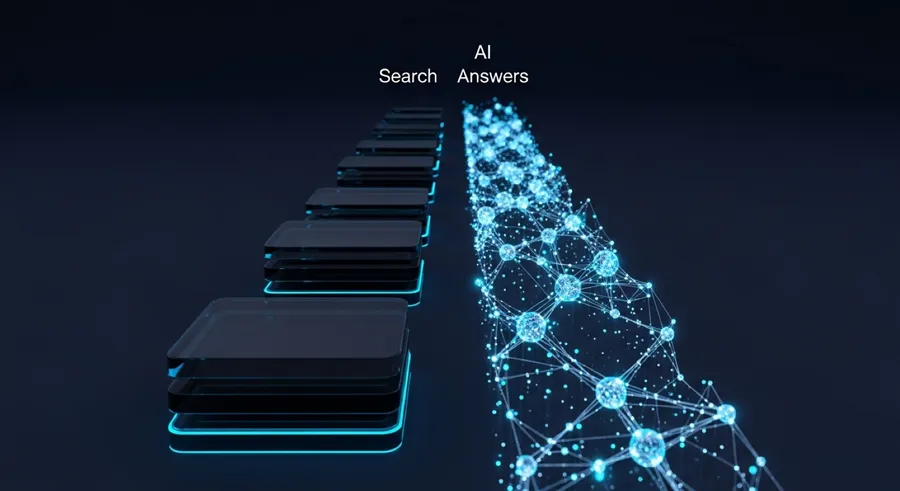
Here’s the reframe that changes the math: being inside the AI Overview is now better than being the blue link below it. When your brand is the cited source, you capture the click that the AI Overview does pass through, plus the authority halo of being the recommended answer. Similarweb’s generative-AI traffic data shows AI-driven referrals growing as more answers carry clickable citations — so the cited source is increasingly where the surviving clicks go. The goal is no longer to avoid AI Overviews; it’s to own the citation slot — the core aim of a generative engine optimization program. Our collection of AI-search citation and click-behaviour statistics gathers the click-behaviour and citation-uplift figures in one place.
What does a realistic AI Overview recovery timeline look like?
Set expectations honestly. A realistic AI Overview recovery runs 60 to 120 days:
- Days 1–30: diagnose with GSC, triage pages by query bucket, restructure your highest-value pages for citation, ship schema.
- Days 30–90: Google re-crawls and re-evaluates; citation behaviour begins to shift; transactional pages stabilize first.
- Days 90–120: informational pages settle into their new citation pattern; you measure recovered clicks and AI referral conversions and double down on what’s working.
You won’t recover 100% of lost clicks — some queries are now answered without a visit, and that’s permanent. But re-prioritizing toward resilient queries and owning the citation slot recovers the traffic that’s actually worth having. That’s the core of how we approach recovery in our AI SEO service.
FAQ
How do I know if AI Overviews caused my traffic drop? Look for impressions holding flat or rising while clicks fall — that divergence is the AI Overviews signature. If both fell together, suspect a ranking loss instead.
Which queries lose the most traffic to AI Overviews? Informational, how-to and simple comparison queries; transactional and “near me” queries are far more resilient.
Can you recover traffic lost to AI Overviews? Partly — by becoming the cited source and re-targeting resilient queries. Plan for 60–120 days; you won’t recover every click, but you recover the valuable ones.
Sources
- Ahrefs — AI Overviews reduce clicks — Accessed 2026-05-29
- Semrush — AI Overviews study — Accessed 2026-05-29
- Google Search Central — AI features and your site — Accessed 2026-05-29
- Google Search Central — FAQPage structured data — Accessed 2026-05-29
- Google Search Central — Article structured data — Accessed 2026-05-29
- Similarweb — Generative AI traffic statistics — Accessed 2026-05-29
Want this done for you?
Tell us what you're trying to grow and we'll send back a concrete plan — no commitment.
Your free audit is on the way.
We'll reply within 24 business hours with your 3 quick wins, your top competitor gap, and a 90-day growth plan. Keep an eye on your inbox.