
Key takeaways
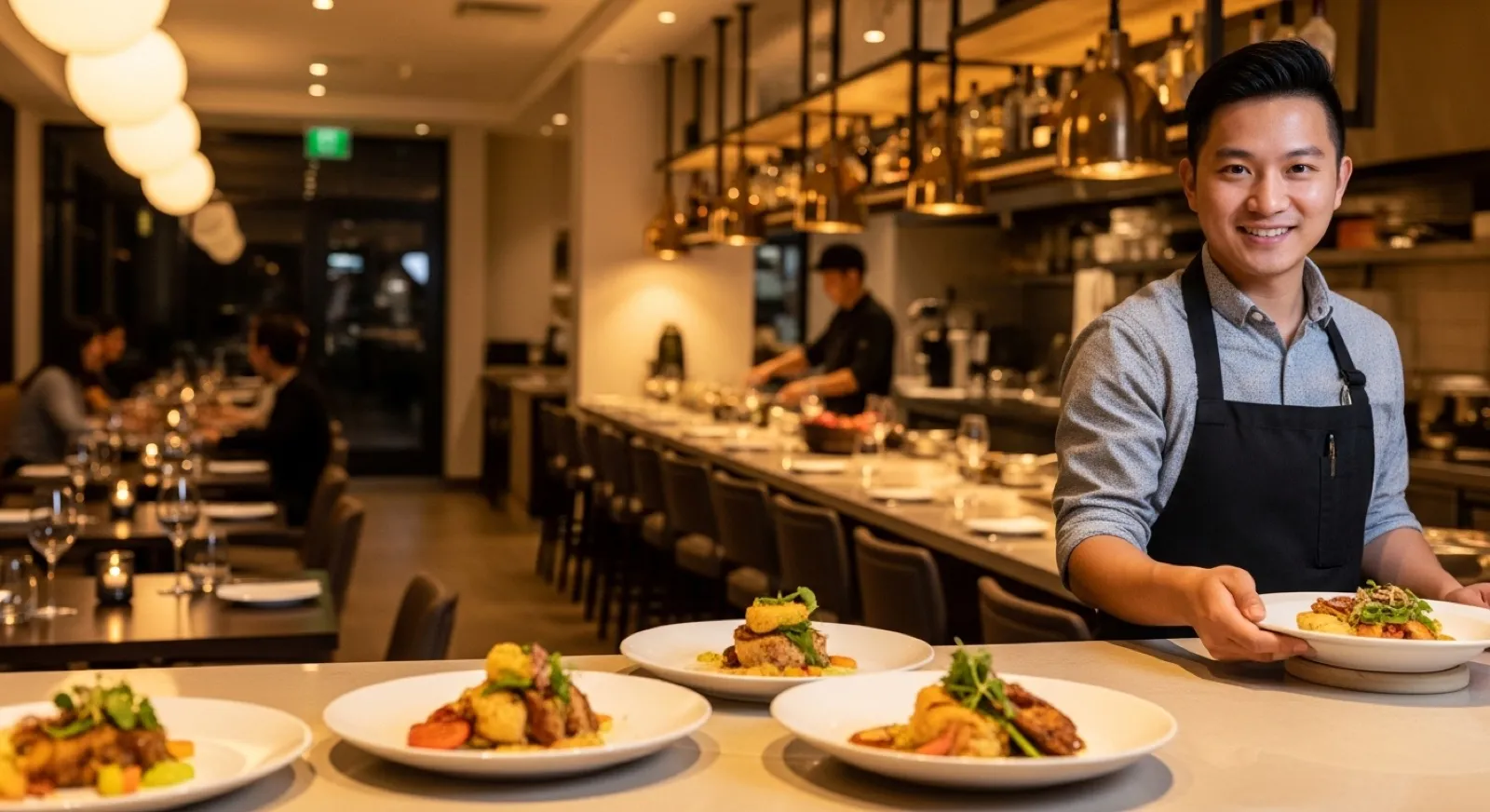
- For local restaurants, the highest-return work is an optimized Google Business Profile — accurate hours, a current menu, and strong food photos — paired with local SEO.
- Reviews are decisive in hospitality: encourage genuine ones, respond to all of them, and never buy or incentivize reviews (that breaches Google's review policies).
- Restaurants are a visual business — Instagram and TikTok drive discovery and desire; Google Ads captures high-intent "near me" searches now.
- Delivery and online-ordering platforms capture orders you'd otherwise miss, but commissions eat margin — balance them with a direct-ordering channel.
- The channels work as one system: search → photos and reviews → book a table or place an order.
- For the underlying disciplines, see our local SEO, social media advertising, and Google Ads pages.
Why restaurant marketing is its own discipline
Marketing a restaurant is not like marketing most businesses. The decision is fast, local, and intensely visual: a hungry person searches "restaurants near me" or "best brunch in [neighbourhood]", scans a few options by their photos and star ratings, and chooses — often within a minute. That means a handful of things matter more here than almost anywhere else: showing up in local search, looking irresistible at a glance, having recent reviews that build trust, and being reachable across every channel where diners discover and order food.
So the job is to build one connected system rather than scattered tactics. Local SEO and your Google Business Profile get you found. Photos and reviews get you chosen. Social media keeps you top of mind and drives discovery. Google Ads captures intent the moment it appears. And delivery and online-ordering visibility captures the orders that never walk through your door. We design these to reinforce one another, measured against covers and orders — not reach for its own sake.
Who this is for
This page is for owners and operators of Canadian food businesses, including:
- Independent restaurants and small local chains, casual to fine dining
- Cafes, coffee shops, and bakeries
- Bars, pubs, breweries, and lounges
- Quick-service, takeout, and ghost/cloud kitchens
- Catering and food-truck businesses
- Specialty food retailers and dessert shops
If you run a single location or a small group across Ontario or Canada and want a steady flow of new diners and orders, this is written for you.
The channels that fill tables and grow orders
No single channel fills a dining room on its own. These five do the heavy lifting, and we run them as one coordinated program rather than disconnected campaigns.
1. Local SEO & Google Business Profile — get found by nearby diners
Most restaurant decisions start with a local search, and the Google Business Profile is the asset that decides whether you show up and get chosen. Google lets restaurants add a menu, upload photos of dishes and the space, and set hours — including special holiday hours, so a diner is never sent to a closed door. Optimizing the profile, your location and menu pages, and your local citations is the foundation of restaurant marketing. We cover the full discipline on our local SEO service page.
2. Reviews & reputation — earn the trust that converts
In hospitality, reviews are often the deciding factor. A steady flow of recent, genuine reviews lifts your map-pack ranking and reassures the next diner. The right approach is to make it easy for happy customers to review you and to respond to every review professionally — including criticism — never to buy reviews, incentivize them, or post fake ones, all of which breach Google's review policies. We set up a system that encourages real feedback and a calm, consistent response routine.
3. Visual social media — drive discovery and desire
Food is sensory, and visual platforms — Instagram and TikTok above all — turn that into discovery and demand. Appetizing photos, short video of dishes being plated, specials, and behind-the-scenes content build an audience that becomes diners. The aim is not follower counts but content that converts: clear location and hours and an easy path to book or order. We run organic content alongside paid campaigns through our social media advertising service so the two reinforce each other.
4. Google Ads — capture high-intent searches now
When someone searches "Italian restaurant open now" or "dinner reservation [neighbourhood]", that is immediate intent worth capturing the moment it happens. Google Ads puts your restaurant at the top of those results and can start producing bookings and orders within days, which is why it pairs so well with the slower-compounding work of SEO. We manage these campaigns through our Google Ads service, with conversion tracking tied to real outcomes — reservations and orders, not just clicks — and built to comply with Google's advertising policies.
5. Delivery-app & online-ordering visibility — capture the orders you'd miss
Delivery and online-ordering platforms — Uber Eats, DoorDash, SkipTheDishes — capture orders that never walk through your door, but their commissions eat into margin. The pragmatic approach is to be visible where your customers already order while building your own direct online-ordering channel so you keep more of each sale over time. Your listings on those platforms deserve the same care as your Google profile: complete information and strong photos, because diners compare options there too. A well-built restaurant website with direct ordering and reservations is the long-term lever that reduces commission dependence.
What's included
| Channel | What it does for the restaurant |
|---|---|
| Local SEO & Google Business Profile | Optimize the profile (menu, photos, hours), location and menu pages, and citations — win the local map pack. |
| Reviews & reputation | Encourage genuine reviews ethically and respond to all reviews — positive and negative — professionally. |
| Visual social media | Instagram and TikTok content that drives discovery and desire; organic and paid working together. |
| Google Ads | Capture high-intent local searches now; track conversions to reservations and orders, not clicks. |
| Delivery & online ordering | Optimized third-party listings plus a direct-ordering channel to protect margin over time. |
| Website & landing pages | Fast, mobile-first pages with menus, photos, reservations, and ordering built in. |
Get your Google Business Profile right first
Before spending on ads, get the free fundamentals right — they carry the most weight for restaurants. Google's own guidance for optimizing a Business Profile covers the essentials, and a few matter most for food businesses:
- Accurate, current hours — including special and holiday hours, so a hungry searcher is never sent to a closed door.
- A complete menu so diners can decide before they ever contact you.
- Strong, recent photos of food and the space — the single biggest driver of clicks from search.
- Correct category and attributes (dine-in, takeout, delivery, reservations) so you appear for the right filters.
- Steady review activity with professional responses to build trust over time.
This is the cheapest, highest-return work in restaurant marketing, and it is where we start every engagement.
How we measure success
The numbers that matter for a restaurant are covers, reservations, and orders at a sustainable cost — not impressions or follower counts. We set up conversion tracking tied to real actions (reservations, online orders, calls, direction requests) and report on new-customer volume and cost per acquisition. SEO and reviews are measured on map-pack rankings, profile views and actions, and review velocity over time. Vanity metrics are diagnostics, never the scorecard. Every claim we make in your marketing is one we can stand behind — no fabricated results, no guaranteed outcomes.
How Digital Estate Media runs restaurant marketing
We are a Mississauga-based agency that runs restaurant programs as one integrated system rather than disconnected services. That means:
- One strategy, five channels. Local SEO and profile, reviews, social, Ads, and delivery visibility are planned together so each reinforces the others.
- Covers-first reporting. Every engagement ties to reservations and orders and cost per new customer — not a dashboard of vanity numbers.
- Margin-aware by default. We balance third-party delivery reach against your own direct-ordering channel so you keep more of each sale over time.
- No long lock-in. We earn the relationship month to month, and you own everything we build.
You can read exactly how we work — a process with your sign-off at each stage. For market context, Statistics Canada publishes data on food services and the broader economy worth understanding before you set a budget.
FAQs
- What is restaurant marketing?
- Restaurant marketing is how restaurants, cafes, bakeries, bars, and other food businesses attract diners and grow orders. For most local restaurants the highest-leverage channels are local SEO and an optimized Google Business Profile (with menu, photos, and accurate hours so you appear in "restaurants near me" searches), review and reputation management, visual social media on Instagram and TikTok, Google Ads for high-intent local searches, and visibility on delivery and online-ordering apps. These channels reinforce each other: a diner finds you in local search, judges you by your photos and reviews, then books a table or places an order.
- How do restaurants get more customers online?
- The fastest wins for most restaurants are a complete, current Google Business Profile and a steady flow of recent reviews — these drive the local map pack where "near me" searches are decided. Beyond that, visual social media (appetizing photos and short video on Instagram and TikTok) builds desire and discovery, Google Ads captures people searching with immediate intent, and presence on delivery and online-ordering platforms captures orders you would otherwise miss. Run together rather than in isolation, they form a predictable system for filling tables and growing takeout and delivery volume.
- Why is Google Business Profile so important for restaurants?
- For restaurants, the Google Business Profile is often the single most important marketing asset because it powers the local map pack and the panel diners see when they search your name or "restaurants near me". Google lets restaurants add a menu, upload photos of food and the space, and set hours including special holiday hours — and these directly affect both whether you appear and whether a hungry searcher chooses you. Accurate hours prevent the worst outcome (a customer arriving to a closed door), strong photos drive clicks, and the menu helps diners decide before they ever contact you. Keeping it complete and current is the cheapest, highest-return restaurant marketing work there is.
- How important are reviews for restaurants?
- Reviews are decisive in hospitality. A steady stream of recent, genuine reviews lifts your local ranking and is often the final factor a diner weighs before choosing where to eat. The right approach is to make it easy for happy customers to leave a review and to respond professionally to every review — positive or negative. You cannot buy reviews, offer incentives for them, or post fake ones; those practices breach Google’s review policies and risk your profile. We build review systems that encourage real feedback and a calm, professional response routine for criticism.
- What kind of social media works best for restaurants?
- Restaurants are a visual, sensory business, so visual-first platforms work best — Instagram and TikTok in particular. Appetizing photos, short video of dishes being made or plated, behind-the-scenes content, and specials or seasonal menus drive both discovery and desire. The goal is not vanity follower counts but content that turns viewers into diners: clear location and hours, an easy path to book or order, and consistent posting. We manage this alongside paid social so organic content and ads reinforce each other.
- Should a restaurant be on delivery apps like Uber Eats, DoorDash, or SkipTheDishes?
- For many restaurants, delivery and online-ordering platforms capture orders you would otherwise miss, but they come with commission costs that eat into margin. The pragmatic approach is to be visible where your customers already order while also building your own direct online-ordering channel so you keep more of each sale over time. Marketing-wise, your listings on those platforms should be as complete and well-photographed as your Google Business Profile, because diners compare options there too. We help restaurants balance third-party reach with direct-ordering economics.
- How long does restaurant marketing take to show results?
- It depends on the channel. A Google Ads campaign and a cleaned-up, well-photographed Google Business Profile can lift bookings and orders quickly — often within days to a few weeks. Local SEO and review velocity compound more slowly, typically a few months to move meaningfully in the map pack and longer to build durable rankings. Social media discovery builds over time as content accumulates. A sensible plan uses the fast channels (Ads, profile, delivery listings) to drive immediate covers while SEO, reviews, and social build the lower-cost, long-term foundation.