· By Salman Habib Chaudhry · AI SEO · 9 min read
AI SEO in Brampton: How GTA Businesses Get Found in ChatGPT & Google AI Overviews
How Brampton and GTA businesses can earn citations in ChatGPT, Perplexity, and Google AI Overviews — and what makes AI SEO different from traditional search.

Most Brampton business owners know they need to rank on Google. But ranking on Google is not the whole story anymore. A growing share of your potential customers are not scrolling through blue links — they are typing questions into ChatGPT, asking Perplexity for a “best [service] in Brampton” recommendation, or getting a direct answer from Google’s AI Overviews before they even see the first organic result.
Key Takeaways
- AI Overviews, ChatGPT, and Perplexity now intercept buyer queries before organic results — if you are not cited, you do not exist for those buyers.
- AI SEO adds citation-worthiness, entity clarity, and third-party directory presence on top of traditional ranking signals.
- Google AI Overviews pull from your Google Business Profile and on-page schema — local businesses have a real advantage here.
- Brampton and Mississauga queries are less saturated than Toronto, so citation gains are achievable faster and with less investment.
- Most GTA clients see measurable AI citation improvements within 60–90 days once schema, FAQ content, and directory listings are in order.
What Changed in 2025–2026
Google’s traditional blue-link SERP still exists, but in 2026 it is often preceded by an AI Overview that answers the question directly. For informational queries — “what is the best SEO agency in Brampton?” — users frequently stop reading after the AI response. If your business is not cited in that response, you do not exist for those buyers.
The same dynamic plays out in ChatGPT and Perplexity. A buyer researching “digital marketing agencies in Mississauga” before requesting a proposal may start their research in one of these tools. These AI platforms pull from web content — blog posts, company pages, review sites, directories — and synthesize them into a recommendation. Where you rank matters, but more important is whether you are visible at all.
AI-generated answers have three characteristics that make them different from organic search:
- They favour authoritative, structured content that directly answers questions.
- They draw heavily from third-party sources (directories, review sites, press mentions) — your own site is one signal among many.
- They update based on content freshness, not just historical authority.
AI SEO vs. Traditional SEO: The Practical Difference
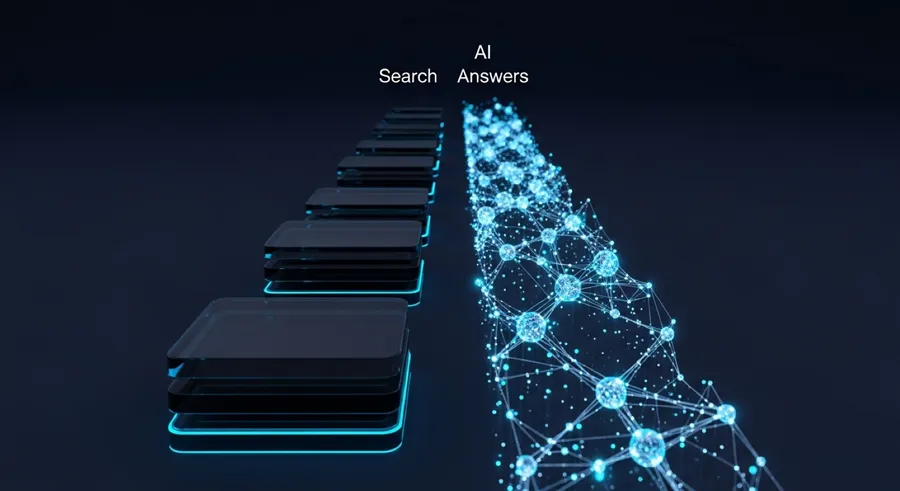
Traditional SEO earns you a position on a results page. AI SEO earns you a citation inside an answer. The two are related — a well-ranked page is more likely to be pulled into AI answers — but the optimization targets are different.
For traditional SEO, you optimize for query intent, keyword density, backlinks, and page authority. For AI SEO, you optimize for:
Citation worthiness: Does your page give a clear, quotable answer to a specific question? AI models prefer content that can be extracted and repeated verbatim without losing meaning.
Entity clarity: Does your page establish who you are, what you do, and where you serve with enough specificity that an AI model can correctly associate you with a category? “Digital marketing agency in Brampton” is a clearer entity signal than “we help businesses grow online.”
Third-party validation: Are you mentioned on Clutch, Sortlist, Google Business Profile, industry directories, and local press? AI models weight these as confirmation signals. A business mentioned only on its own website is weaker than one mentioned across multiple authoritative sources.
Schema markup: Structured data (Organization, LocalBusiness, Service, FAQ) gives AI models machine-readable confirmation of your claims. Google uses schema explicitly in its AI Overview generation process.
The Three AI Channels That Matter for Brampton and Mississauga Businesses
1. Google AI Overviews
The highest-volume channel for most local businesses. AI Overviews appear above organic results for many commercial and informational queries. Optimization here is the most similar to traditional SEO — authoritative pages, schema markup, and content that directly addresses the query. Local businesses benefit from strong Google Business Profile signals combined with on-page optimization.
For GTA businesses, Google’s AI Overviews regularly pull from local directories and GBP listings for “near me” and city-specific queries. If you have a complete, reviewed GBP listing in Brampton, Mississauga, or Oakville, that data feeds directly into local AI answers.
2. ChatGPT and Bing AI
ChatGPT’s search-enabled responses (Bing-powered) draw from the open web. For Brampton and GTA queries, results are pulled from Bing’s index, which weights different signals than Google. Bing prioritizes content that answers questions directly, and it leans more heavily on third-party directory listings and structured content.
If a buyer types “who are the best digital marketing agencies in Brampton” into ChatGPT, the answer is assembled from:
- Ranking positions in Bing’s index
- Clutch, Sortlist, DesignRush, and similar agency directories
- LinkedIn company pages and reviews
- News mentions and case studies
Being absent from agency directories is the most common reason GTA businesses do not appear in ChatGPT answers for local commercial queries.
3. Perplexity
Perplexity is smaller by volume but attracts a disproportionate share of high-intent buyers doing serious research. It cites sources prominently, making each citation more valuable — a buyer who sees your business cited in a Perplexity answer can click directly to your site. Optimization for Perplexity is similar to AEO for Google: clear question-and-answer content, authoritative source signals, and strong entity establishment.
What Brampton and Mississauga Businesses Need to Do
1. Establish your entity in AI-readable formats
Your website should include Organization schema with your name, service area (Brampton, Mississauga, GTA), phone number, and services listed. This is machine-readable confirmation that your business exists and serves a specific area. Many local businesses have schema technically present but incorrectly configured — wrong entity type, missing areaServed, or no service definitions.
2. Create FAQ content that answers real buyer questions
AI models pull heavily from FAQ sections. For a Brampton business, this means pages that answer: “How long does AI SEO take?”, “What does an AI citation audit include?”, “How do I know if my business appears in ChatGPT answers?” Answers should be two to four sentences — specific, factual, and directly useful.
3. Get listed on the directories AI models trust
For a professional services business in Brampton, the relevant directories are Clutch, Sortlist, GoodFirms, DesignRush, and local platforms like hellodarwin.com. These are not just for referral traffic — they are anchor points that AI systems use to confirm your legitimacy and category.
4. Build local citations with consistent NAP
Your business name, phone number, and city should be consistent across all platforms. Inconsistent information creates entity ambiguity for AI systems — they may cite a competitor simply because that competitor’s data is cleaner and more consistent. This is particularly common with Brampton and Mississauga businesses that have changed addresses or phone numbers over time.
5. Optimize for AI Overview position in your category
For each service you offer in Brampton or Mississauga, identify the two to three questions buyers are most likely to ask an AI. Write pages or blog posts that answer those questions directly and completely. These pages do not need to rank first in traditional search — they need to be the clearest available answer to a specific question that an AI model can recognize and cite. GEO strategy starts here.
A Note on AI Overview Recovery
If you have seen impressions drop on queries where your site used to rank well, you may be experiencing AI Overview displacement — Google surfacing an AI answer that absorbs clicks before users reach your position. This is real and measurable in Google Search Console.
Recovery is not the same as traditional SEO recovery. The goal is to become the source the AI Overview cites, not to rank below it. That requires the citation-worthiness optimization outlined above: clear question-answering content, structured data, and authoritative third-party presence.
For GTA businesses specifically, AI Overview displacement is more common for informational queries (“what is local SEO”) and less common for transactional local queries (“local SEO company in Brampton”). Transactional local queries still tend to show Google Maps pack results alongside or instead of AI Overviews, which means your GBP and traditional local SEO remain critical.
How Digital Estate Media Approaches AI SEO for GTA Businesses
An AI SEO engagement at DEM starts with an AI citation audit: we query ChatGPT, Perplexity, and Google AI Overviews for the category queries your buyers use, document which competitors are being cited, and identify the specific gaps — missing schema, absent directory listings, weak FAQ content, entity ambiguity — that prevent your business from appearing.
From there, the work is a mix of technical fixes (schema, structured content) and presence-building (directory submissions, FAQ content, entity signals). Most GTA clients see measurable citation improvements within 60–90 days for local and regional queries.
We work with businesses in Brampton, Mississauga, Oakville, Markham, and across the GTA. If you are not currently appearing in AI search results for your category, that is a gap you can close with the right approach. Get in touch to start with a citation audit.
FAQ
What is AI SEO? AI SEO is the practice of optimizing your online presence so AI systems like ChatGPT, Perplexity, and Google AI Overviews include your business in their answers. It builds on traditional SEO but adds citation-worthiness, entity clarity, FAQ content, and third-party directory presence as key optimization targets.
How is AI SEO different from GEO or AEO? Generative Engine Optimization (GEO) and Answer Engine Optimization (AEO) are near-synonyms for the same goal: earning citations in AI-generated answers. “AI SEO” is the broader umbrella term; GEO refers specifically to generative AI platforms, AEO refers to answer engines like featured snippets and voice assistants. All three overlap significantly in practice.
Does AI SEO work for local businesses in Brampton? Yes — local and regional queries are among the highest-opportunity areas for AI SEO. Buyers searching for “AI SEO agency Brampton” or “digital marketing company near me” in AI tools get locally-filtered answers, and local businesses with strong entity signals often outrank larger national agencies in these local AI responses.
How long does it take to appear in AI search results? For AI Overviews on Google, improvements can appear within 30–60 days once optimizations are in place, since Google re-crawls regularly. For ChatGPT and Perplexity, timelines are less predictable — typically 60–90 days for noticeable citation gains on local queries.
What is an AI citation audit? An AI citation audit queries the major AI platforms (ChatGPT, Perplexity, Google AI Overviews, Bing Copilot) for your category and city, documents which businesses are cited, and identifies the specific factors — schema gaps, missing directories, weak FAQ content — that explain why your business is not appearing. It is the starting point for any AI SEO engagement.
What is the difference between AI SEO in Brampton vs. Mississauga vs. Toronto? The optimization approach is the same, but the competitive landscape differs by city. Toronto queries typically have more established competitors with higher domain authority. Brampton and Mississauga queries have fewer specialized AI SEO practitioners, which means local businesses can achieve AI citation visibility faster and with less investment than comparable Toronto campaigns.