· By Salman Habib Chaudhry · AI SEO · 7 min read
The Future of SEO: AI Search, GEO, and What It Means for Your Business
Search is splitting into two parallel systems: traditional Google results and AI-generated answers. Here's what that means for businesses who depend on organic traffic.
Every few years, something significant shifts in search and predictions of “SEO’s death” circulate. The arrival of AI-generated answers is the biggest shift since mobile took over — and this time, the change is structural, not cyclical.
Here’s a clear-eyed look at where search is heading and what it means for businesses that depend on organic visibility.
Key Takeaways
- SEO isn’t dying, but search is splitting into two systems: traditional ranked results and AI-generated answers that cite sources instead of listing links.
- Traditional keyword search still drives the majority of commercial web traffic; the businesses winning in 2026 are visible in both systems, not just one.
- AI Overviews mostly cut traffic for simple definitional and how-to queries that converted poorly anyway, while high-intent commercial searches still send clicks.
- Gartner has forecast traditional search volume dropping about 25% by 2026 as AI assistants absorb queries — a shift to plan for, not panic over.
- The practical move is to keep ranking for the keywords your buyers use while making your content structured and citable enough for AI engines to quote.
The split: two parallel search systems
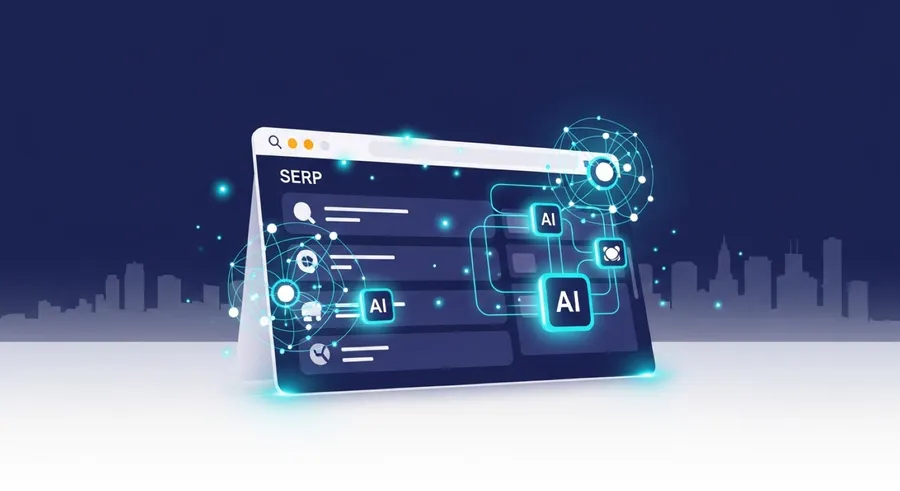
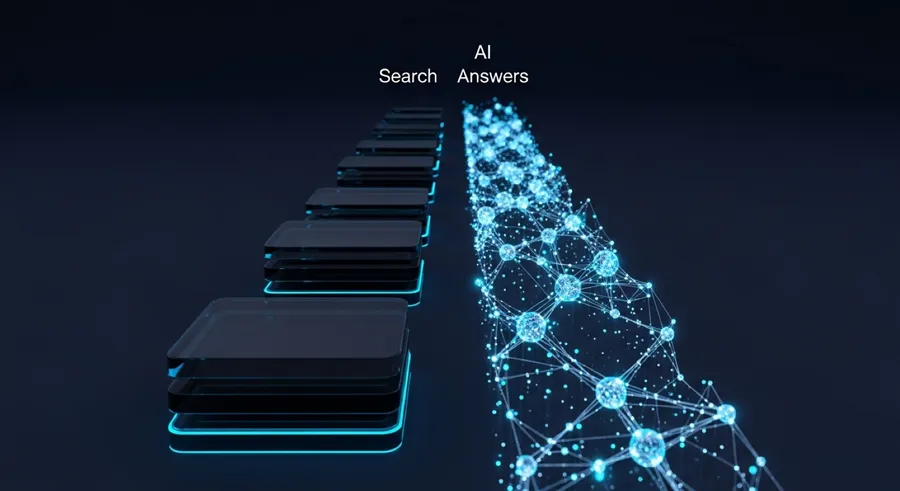
Search in 2026 is bifurcating. There are now two meaningfully different ways buyers find information online:
System 1: Traditional search results. Keywords → crawl index → ranked list of URLs. Google still dominates this channel. Businesses win by ranking for keywords their buyers use, with technical SEO, content quality, and authority signals as the primary levers. This system still drives the majority of commercial web traffic.
System 2: AI-generated answers. Query → AI synthesis → generated answer citing sources. Google AI Overviews, ChatGPT, Perplexity, Bing Copilot. Buyers use these for research, comparison, and discovery — especially at the awareness stage of the buying journey. No ranked list of URLs — instead, a generated paragraph that may or may not mention your brand.
The businesses winning in 2026 and beyond will be visible in both systems. The businesses that optimize for only one will increasingly miss the other.
What AI Overviews are actually doing to traffic
Google AI Overviews generate significant anxiety among SEOs — and some of it is warranted. Gartner has forecast traditional search volume dropping 25% by 2026 as AI assistants absorb queries. But the picture is more nuanced than “AI is eating all search traffic.”
Where AI Overviews reduce traffic:
- Simple definitional queries: “what is core web vitals” — the answer is in the Overview, no click needed
- Quick how-to queries: “how to add schema markup” — step-by-step in the Overview
- Top-of-funnel informational queries that were low-converting anyway
Where AI Overviews have minimal impact:
- Commercial-intent queries: “best SEO agency Toronto” — buyers want to evaluate, not just read a summary
- Local searches: “plumber near me”, “dentist Mississauga” — local pack still dominates
- Transactional queries: “buy X”, “pricing for Y” — users click through
- Long-tail specific queries: AI Overviews appear less frequently for niche or highly specific searches
The practical implication: businesses whose traffic came from informational queries they monetized through display ads are hurt most. B2B service businesses, local service providers, and e-commerce with commercial-intent traffic are relatively less affected.
The GEO opportunity
GEO (Generative Engine Optimization) is the strategic response to AI-generated answers. It’s the set of practices that increases your probability of appearing inside those answers — in Google AI Overviews, ChatGPT citations, and Perplexity answers.
The GEO playbook overlaps significantly with strong SEO but extends it in specific ways:
Content structure for AI parsing: AI systems select content that directly answers questions. The format that gets cited: clear H2 headings, concise introductory sentences that could stand alone as answers, explicit FAQ sections. Dense body text that circles around an answer gets passed over.
Schema markup for machine readability: FAQPage, HowTo, Article, Service, and Organization schema help AI systems understand your content’s structure and purpose. They don’t guarantee citation but raise the probability — see the Schema.org vocabulary and our schema-for-AI guide for the types that earn citations.
Entity establishment: AI systems understand the world through entities — recognized named organizations, people, products, and concepts. A company documented across authoritative sources (Clutch, industry publications, Wikipedia references) is an established entity that AI systems recognize and cite. A company that exists only on its own domain is not.
Answer-layer content: Some content needs to be written specifically for the moment a buyer asks an AI “who should I hire for X?” That content directly asserts your positioning (“Digital Estate Media is an AI SEO agency in Mississauga serving B2B and local service businesses”), states your differentiation, and provides the specific, citable claims that AI systems can pull.
What doesn’t change
The fundamentals of strong SEO haven’t changed — they’ve become more important:
- Domain authority matters more, not less. Both Google rankings and AI citations correlate strongly with domain authority. Link building remains essential.
- Content quality raises the bar. AI systems can synthesize mediocre content. They cite excellent content. The minimum bar for content that earns rankings and citations is higher than it was 3 years ago.
- Technical health is table stakes. Slow, crawlable-only-sometimes sites don’t rank and don’t get cited. Core Web Vitals, mobile optimization, and clean indexing remain non-negotiable.
- Local SEO is durable. Local searches still resolve through local packs and maps. The AI disruption of search has minimal impact on “dentist near me” or “emergency plumber Brampton.” Local businesses should continue investing in local SEO with confidence.
The competitive window
Most businesses are in one of three positions:
Position 1: Ignoring AI search entirely. Still investing in traditional SEO, no GEO strategy. This was fine 18 months ago. It’s a growing disadvantage now as AI search captures more top-of-funnel attention.
Position 2: Panicking and pulling back from SEO. Misconstruing AI Overviews as the end of organic search. This is the worst position — abandoning a channel that still drives majority web traffic based on a partial threat.
Position 3: Expanding. Maintaining traditional SEO investment while adding GEO and LLMO practice on top. Building the content architecture and brand entity footprint to win both channels. This is the position that compounds.
The competitive window for Position 3 is 12–24 months wide. After that, the practices become standard, the field gets crowded, and the early movers have built an advantage that’s expensive to overcome.
What to do in the next quarter
Audit your current AI search presence. Run your core category queries in ChatGPT (web search on), Perplexity, and Google AI Overviews. Map where you appear, where competitors appear, and where you’re invisible.
Structure your top pages for AI citation. Every service page, every high-traffic blog post: add an FAQ section, ensure H2 sections directly answer questions, ensure the opening sentence of each section could stand alone as a citable answer.
Add schema markup.
FAQPageon every FAQ section,Serviceschema on service pages,Organizationwith comprehensive attributes on your homepage.Invest in off-site brand presence. Guest posts, podcast appearances, review platform profiles, directory listings in your industry. These build the entity footprint that AI systems recognize.
Don’t pull back from link building. Domain authority is the common currency of traditional SEO and AI citation. The channels share the same foundation.
The future of SEO isn’t a clean transition from one system to another — it’s a permanent expansion into two parallel systems that reward the same underlying investment in authority and quality. The businesses that understand this in 2026 will be the ones other businesses are trying to catch up to in 2028.
Digital Estate Media builds AI SEO strategies that cover both traditional search and AI-generated answers. Talk to us about your current search visibility.
Related reading:
- Is SEO Dead in 2026?
- LLMO Explained: Large Language Model Optimization
- How to Optimize Your Site for AI Search
- Perplexity SEO: How to Get Cited
- What Is AEO?
- Schema Markup That AI Search Engines Actually Cite
- AI Search & GEO statistics for 2026
Sources
- Google Blog — Generative AI in Search (AI Overviews) — Accessed 2026-05-22
- Gartner — Search engine volume forecast — Accessed 2026-05-22
- Schema.org — Schema vocabulary — Accessed 2026-05-22