· By Salman Habib Chaudhry · SEO · 11 min read
AI SEO vs Traditional SEO: What Actually Changed in 2026 (And What Still Works)
Traditional SEO is not dead — but it no longer works alone. Here is exactly what changed with AI search in 2026, what still works from the SEO playbook, and what you need to add.
Want results like this for your business?
Get a free growth audit →Traditional SEO is not dead. But the version of SEO that existed in 2022 — write good content, earn links, wait for rankings — is no longer sufficient on its own.
In 2026, a significant and growing share of buyer intent is resolved before a Google search happens. Buyers ask ChatGPT “who should I hire for Google Ads in Toronto?” and get a short list. They ask Perplexity “what are the best SEO agencies for a Mississauga dental clinic?” and get three named recommendations. If your business is not in those answers, you are missing buyers who have already decided to act — the highest-intent stage of the funnel.
This article explains exactly what changed, what still works from the traditional SEO playbook, and what you need to add in 2026.
What Has Not Changed: The Foundation Still Matters
Before covering what is new, it is important to be clear about what is not new — because a lot of “AI SEO is everything” content implies the old playbook is worthless. It is not.
Technical SEO is still foundational. Pages that cannot be crawled cannot be ranked or cited. Core Web Vitals still influence rankings. Broken canonicals still fragment authority. Duplicate content still dilutes relevance signals. These fundamentals did not change when ChatGPT launched — they became more important, because AI crawlers have the same accessibility requirements as Googlebot and less tolerance for JavaScript rendering.
Content quality still determines authority. AI systems cite sources they assess as credible and topically authoritative. The same signals that have always indicated content quality to Google — depth, specificity, first-hand expertise, cited sources, structured writing — are the signals AI systems use to identify citable content. Thin, vague, keyword-stuffed pages perform worse in AI citations than they do in traditional rankings.
Links still matter. Domain authority built through editorial backlinks is one of the strongest predictors of AI citation frequency, not just Google rankings. ChatGPT and Perplexity preferentially recommend businesses that appear in third-party sources those systems trust (Clutch, G2, Wikipedia, established publications). A site with no editorial links is invisible to AI recommendations regardless of on-site quality.
The shift is not from SEO to something else. The shift is from SEO only to SEO plus a new layer.
What Changed: The New Layer
1. A New Category of Search Intent Has Emerged
The traditional search funnel assumed all search intent went through Google. In 2026, it does not.
Three intent types are now regularly resolved outside of Google entirely:
Comparison and recommendation queries. “Who is the best accountant for a tech startup in Waterloo?” → ChatGPT. “What are the top HVAC contractors in Mississauga?” → Perplexity. These queries previously went to Google with the intent to read review sites and directories. Now they often go directly to an AI that synthesises the answer from those same sources.
Definition and how-to queries. “What is generative engine optimization and how do I do it?” → ChatGPT or Gemini, which returns a comprehensive answer without the user needing to find and read multiple articles. This content used to drive significant organic traffic. In 2026, much of it is resolved in the AI interface.
Local service discovery. “Find me a dentist near Oakville who accepts new patients and does same-day appointments.” → ChatGPT with location-aware search (added in late 2024) or Perplexity, which returns specific business recommendations with addresses and links.
If your business serves these query types, traditional SEO alone does not capture this intent.
2. Google’s Search Results Page Changed Structurally
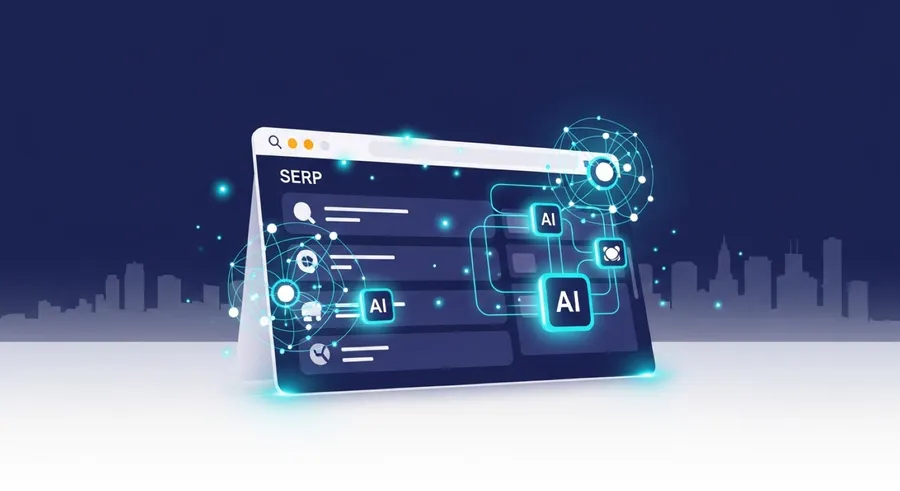
Even for queries that still go through Google, the search results page looks different in 2026:
- Google AI Overviews appear above organic results for an estimated 30–40% of searches (HubSpot, 2025), often providing a complete answer without a click.
- Featured snippets (the Answer Box) still appear for some queries, but AI Overviews have replaced them for many.
- For informational queries, the click-through rate to organic results has declined measurably as more answers are served inline.
This does not mean organic rankings are worthless — the businesses cited inside AI Overviews are pulled from the organic index, meaning traditional SEO is still what gets you indexed and authoritative enough to be cited. But the output of that SEO work now includes AI Overview citations, not just ranked positions.
3. Entity Recognition Matters More Than Keywords
In traditional SEO, the target was a keyword. You picked “SEO services Mississauga,” wrote content around it, and measured rank position for that phrase.
In AI SEO, the target is an entity. AI systems do not primarily match keywords to pages — they match intents to entities. When someone asks ChatGPT “who is a good local SEO agency in Mississauga?”, ChatGPT is not scanning for pages that contain the phrase “local SEO agency Mississauga.” It is looking for entities (businesses, people, organisations) that it recognises as credible and relevant to that query.
Entity recognition requires:
- A consistent, unambiguous brand name across all online appearances
- Schema markup (Organization, LocalBusiness) that explicitly defines who you are, what you do, and where you do it
- A Wikidata entity (a Q-number that connects your name across the web as a single disambiguation anchor)
- Third-party sources that mention your brand name in context — directories, reviews, press, publications
A business with strong keyword targeting but weak entity signals will rank in traditional search but not appear in AI recommendations. The inverse is also possible: strong entity signals with thin on-page content generates AI citations without traditional rankings. The goal is both.
4. The Content Format That Wins Has Changed
AI systems extract passages, not pages. The format of content that ranks well in 2026 is structured around extraction points — specific, self-contained paragraphs that a language model can quote directly in a generated answer.
Old format (still works for traditional SEO, suboptimal for AI): Long-form essays with flowing prose, gradual build-up, and conclusions at the end.
New format (works for both):
- Definition block in the opening 100 words
- Numbered or bulleted steps where each item is independently meaningful
- FAQ sections with 100–160 word answers
- Comparison tables with specific, factual cells
- Key takeaway boxes with 3–5 self-contained bullets
The shift is not about length — long-form content still earns topical authority. It is about internal structure. A 5,000-word guide written as flowing prose has fewer citable passages than a 2,500-word guide structured around definition blocks, numbered steps, and FAQ sections.
The Comparison: Traditional SEO vs AI SEO
| Dimension | Traditional SEO | AI SEO (GEO/AEO) |
|---|---|---|
| Primary target | Google rankings (positions 1–10) | AI citations and recommendations |
| Currency | Keyword relevance + backlinks | Entity recognition + on-site citability |
| Measurement | Rank position, organic traffic | Citation frequency, AI share of voice, AI referral traffic |
| Technical requirement | Crawlability, indexability, performance | Same, plus server-side rendering, robots.txt AI crawler allowances |
| Content strategy | Long-form, keyword-optimised | Structured, passage-citable, FAQ-led |
| Off-site signals | Editorial backlinks | Backlinks + Clutch/G2 reviews + Wikidata + directory listings |
| Schema priority | Title, meta, Open Graph | Organization, LocalBusiness, FAQPage, HowTo, Article with Person author |
| Timeline | 3–6 months for new pages | 4–8 weeks for Perplexity; 3–6 months for ChatGPT |
These are not competing strategies. The table shows additive requirements — AI SEO adds to the traditional SEO checklist, not replaces it.
What You Should Stop Doing
A few practices are not just ineffective in 2026 — they actively harm performance.
Stop optimising for keyword density. Google’s Neural Matching and MUM systems read topical relevance, not phrase frequency. The phrase “SEO services Mississauga” appearing 18 times on a page registers as a signal of low quality, not high relevance. Write for the topic, not the count.
Stop publishing thin FAQ pages for schema alone. A FAQ section where every answer is 15–20 words is not citable. AI systems skip it. Google’s rich results documentation requires that FAQ content be substantive and not purely promotional. Write FAQ answers of 100–160 words each — enough to be self-contained and genuinely useful.
Stop building low-quality guest post links. Paying for guest posts on irrelevant, low-traffic sites creates an obvious footprint in Ahrefs’ spam score and in Google’s quality assessments. It does not help AI citations (AI systems do not weight links from link farms). The effort spent on 20 paid guest posts would produce more impact as one editorial guest post on a relevant industry publication.
Stop ignoring authorship. Pages without a named author with verifiable credentials are scoring lower in E-E-A-T assessments. AI systems specifically downweight content from unnamed or unverifiable authors when the topic requires expertise (health, finance, legal, marketing strategy). Add an author byline with a link to a real LinkedIn profile to every piece of content you publish.
What You Should Start Doing
1. Publish an llms.txt file. If you do not have one, publish it this week. It takes 30–60 minutes and directly improves your citability with Perplexity and Claude. A comprehensive llms.txt with CC BY 4.0 licensing, geographic coverage, and pricing signals is the highest-leverage 1-hour action available for AI visibility right now.
2. Restructure your 3 highest-traffic pages for passage citability. Add a definition block to the first 100 words, add a FAQ section with 100–160 word answers, and source every statistic you claim. Prioritise the pages where you most want to be cited — your main service page, your city-specific landing page, and your best blog post.
3. Create your Wikidata entity. This is free and takes 30 minutes. Go to wikidata.org, create a new item for your business, and add your website, location, founding year, and industry. Once the Q-number is assigned, add it to your homepage Organization schema as a sameAs URL and to your llms.txt sameAs block.
4. Get 3 Clutch reviews. For B2B service businesses, Clutch reviews are weighted more heavily in AI recommendation outputs than Google reviews, because Clutch’s verification process creates a credibility signal that self-published Google reviews do not. Three verified Clutch reviews — from real, named clients who describe specific outcomes — can move a business from absent to present in ChatGPT’s agency recommendation outputs within 60 days.
5. Allow AI crawlers in your robots.txt. Check that GPTBot, ClaudeBot, PerplexityBot, OAI-SearchBot, and Googlebot-Extended are all explicitly allowed. If you added a blanket crawl restriction years ago for performance reasons, it may be blocking all of them.
How to Measure AI SEO
Traditional SEO measurement (rank position, organic sessions) does not capture AI search performance. You need two additional measurement layers:
Citation tracking: Build a fixed list of 15–25 buyer-intent prompts that represent how your ideal clients would ask for your category of service. Run them on ChatGPT, Perplexity, and Gemini on the same day each month. Record whether you appear, who is cited instead, and what source the AI referenced. This is your AI share of voice metric.
AI referral traffic in GA4: AI engines that include clickable links (Perplexity, ChatGPT Search, Gemini) send referral traffic your GA4 tracks by source. Create a custom GA4 segment filtering referral traffic from perplexity.ai, chat.openai.com, gemini.google.com, and bing.com (for Copilot). This is the closest thing to measurable AI search traffic available today.
Combine these two: citation tracking tells you whether AI engines are mentioning you; referral traffic tells you which of those mentions are generating clicks. Both matter — a Perplexity citation without a link still influences the user even without generating a referral session.
The Bottom Line
In 2026, SEO is table stakes. A well-optimised site with strong backlinks still drives meaningful organic traffic — and that work is not wasted because it is the same technical foundation AI systems require to crawl and assess your pages.
What changed is that organic traffic is not the only place buyer intent shows up anymore. AI-generated answers intercept an increasing share of the highest-intent searches before they reach your organic results. Building for those answers requires a new layer on top of the traditional playbook: entity signals, structured citability, and third-party corroboration.
The businesses in Ontario that start building that layer now — while most competitors are still focused exclusively on traditional rankings — will have a significant advantage in 12 months. Not because they will have solved AI SEO, but because the compounding nature of entity signals means that the ones built in 2026 will still be working in 2029.
If you want to know where you stand, our AI Visibility Audit tool scores your current GEO readiness in a few minutes. Or book a call and we will audit it for you.
Our AI SEO service covers both layers — traditional rankings and AI citation signals — as one integrated engagement. The technical foundation starts with Core Web Vitals and crawlability, and the entity and content layer is covered in our GEO service and the Future of SEO: AI Search and GEO overview. For Ontario businesses starting from scratch, the AI Marketing Stack for Ontario SMBs shows how AI SEO fits into the full channel mix.
Want this done for you?
Tell us what you're trying to grow and we'll send back a concrete plan — no commitment.
Your free audit is on the way.
We'll reply within 24 business hours with your 3 quick wins, your top competitor gap, and a 90-day growth plan. Keep an eye on your inbox.