· By Salman Habib Chaudhry · SEO · 7 min read
How Long Does SEO Take? Realistic Timelines for 2026
SEO takes longer than most agencies admit. Here's an honest, month-by-month breakdown of what to expect — and what factors make it faster or slower.

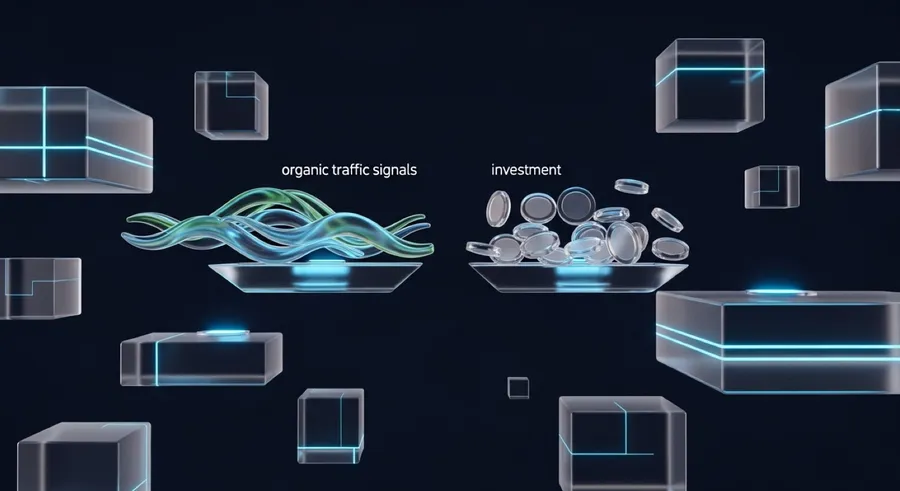
Short version: expect initial ranking movement in 60–90 days, meaningful traffic by month 4–6, and full ROI somewhere in the 9–18 month window — after which it compounds. The most common SEO disappointment comes from mismatched expectations against that curve. A business starts in January, expects significant results by March, sees limited movement, and concludes “SEO doesn’t work.” Google has stated publicly that SEO improvements typically take “four months to a year” to be visible — but most businesses still walk away 90 days in, three months before the compounding kicks in.
Here’s an honest, month-by-month breakdown of what to expect.
Key Takeaways
- Google states publicly that SEO improvements typically take four months to a year to be visible — yet most businesses quit around 90 days, right before the compounding starts.
- Month 1 is foundation: technical audit, keyword strategy, and competitor analysis, usually with little visible ranking movement.
- The first real signs of progress tend to show in months 3–6 as on-page work and early content take hold.
- Established sites move faster than brand-new ones; competitive keywords and new domains can take 6–12 months to see significant organic traffic.
- The most common reason SEO “doesn’t work” is mismatched expectations and stopping too early, not a flaw in the approach.
The month-by-month reality
Month 1: Foundation and audit
What’s happening:
- Technical SEO audit — identifying crawl errors, speed issues, indexation problems, duplicate content
- Keyword research and strategy — mapping your target keywords to your pages
- Competitor analysis — understanding what’s working for the sites you need to beat
- On-page optimization begins — title tags, meta descriptions, heading structure, internal linking
- Google Business Profile optimization (if local)
What you’ll see:
- Very little externally visible change
- Some pages may get re-indexed and reprocessed by Google
- Technical fixes may produce small quick wins (a 404 fixed, a redirect chain resolved)
Don’t panic. This is the most important month even if you can’t see results yet.
Month 2: Content and initial signals
What’s happening:
- First content pieces published (blog posts, service page upgrades)
- Link building outreach begins (directory submissions, citation building, guest post pitching)
- Schema markup implemented
- Core Web Vitals improvements if needed (see our Core Web Vitals checklist)
What you’ll see:
- Google Search Console may show new keyword impressions appearing
- Some long-tail and low-competition keywords may start to rank (positions 20–50)
- Local map pack positions may start improving for GBP-optimized searches
This is normal. The rankings you see now are early signals, not final positions.
Month 3: First movement
What’s happening:
- Content published in month 1–2 starts to accumulate initial engagement signals
- Links acquired are being crawled and processed
- Ongoing keyword ranking monitoring guides pivots in strategy
What you’ll see:
- More keywords appearing in the 10–30 position range
- Some keywords may break into the top 10 for the first time (lower-competition terms)
- Local searches showing more consistent map pack appearances
Key inflection: if you see zero movement across any keyword by end of month 3, that’s a signal to diagnose — not to quit.
Month 4–6: Meaningful gains begin
What’s happening:
- Content cluster is growing — more topical coverage, better internal linking
- Link profile strengthening — domain authority starting to respond
- Google recognizes you as a relevant source for your target topics
What you’ll see:
- Traffic starting to grow meaningfully (often 20–50% above baseline)
- Target keywords breaking into first page for some terms
- Inbound leads from organic search beginning — small but real
- Local map pack becoming more consistent for primary terms
This is when SEO becomes real. Month 4–6 is when skeptical business owners become believers.
Month 7–12: Compounding phase
What’s happening:
- Established content starts earning more links organically
- Domain authority is compounding — new pages rank faster because the domain is trusted
- Competitor gap analysis identifies new expansion opportunities
What you’ll see:
- Significant traffic growth (often 2–3× baseline by month 12 for effective campaigns)
- Multiple first-page rankings for commercial-intent keywords
- Consistent inbound lead flow from organic search
- Decreasing cost-per-lead as volume grows without proportional cost increase
This is the ROI phase. The monthly retainer that felt expensive in month 2 looks like a bargain by month 10.
Year 2 and beyond: Defense and dominance
Strong organic positions don’t disappear overnight. With ongoing maintenance and content, rankings hold and improve. The year-2 cost-per-lead from SEO is typically 50–70% lower than year-1 because the infrastructure is built and you’re compounding on top of it.
How long until you show up in AI search?
A question worth separating out in 2026: AI citations don’t follow the same clock as Google rankings. AI answer engines with live retrieval — ChatGPT with search, Perplexity, Google AI Overviews — re-evaluate sources far more often than Google re-ranks the SERP, so a strongly structured, factual page can start appearing in AI answers within weeks of publishing, sometimes before it cracks the first page of Google.
The catch is consistency. Showing up once in an AI answer is fast; showing up reliably across engines is slower, because that depends on your overall entity authority and how many independent sources corroborate your claims — which builds over the same 3–6 month horizon as traditional authority. So the honest timeline is: early AI citations in weeks, dependable AI presence in months. The work that gets you there is the same content and technical foundation described below. See how to optimize for AI search for the tactics.
Factors that make SEO faster
Established domain: A 5-year-old site with existing authority moves faster than a brand-new domain. Existing link equity and domain trust accelerate ranking timelines.
Less competitive market: “Landscaping contractor Huntsville” is less competitive than “SEO agency Toronto.” Less competition = faster rankings.
Technical headroom: If your site has fixable technical issues (site speed, crawlability, duplicate content) that can be resolved quickly, you can see faster-than-average early gains as Google re-evaluates your fixed site.
Existing content: Sites with existing content that can be optimized (rather than needing to be built from scratch) see faster results from optimization work.
Higher budget: More budget = more content, more link building, faster execution. $5,000/month beats $1,500/month on timeline, not just quality.
Factors that make SEO slower
New domain: Google treats new domains cautiously. The “Google sandbox” effect — which Google’s John Mueller has discussed in office hours without formally confirming the term — means new domains often see limited ranking despite good optimization for the first 3–6 months.
Highly competitive market: If you’re targeting “mortgage broker Toronto” or “personal injury lawyer Ontario,” you’re competing with entrenched incumbents who’ve invested millions in SEO over years. Patience (and budget) required.
Weak technical foundation: Severe technical issues that take months to resolve delay everything downstream.
Inconsistent execution: Starting and stopping, changing agencies frequently, or inconsistent content publishing slows compounding significantly.
The comparison with paid ads
Google Ads produces results immediately — you launch a campaign and get clicks that day. SEO takes 6–12 months to reach full ROI.
But:
- Google Ads stops producing leads the moment you stop paying
- SEO continues producing leads after the investment is made (with maintenance)
- Year-2 cost-per-lead from SEO is typically 5–10× lower than paid search
The right answer for most businesses: run both in parallel. Ads cover immediate pipeline needs while SEO builds. Once organic rankings are established, shift budget from ads to SEO maintenance and watch the cost-per-lead drop.
What to actually watch in months 1–3
Don’t obsess over rankings in month 1. Instead, track:
- Crawl health: Are all important pages indexed and crawlable?
- Impressions: Is Google Search Console showing your pages appearing for relevant queries (even if not ranking yet)?
- Technical score: Have the highest-impact technical issues been resolved?
- Content published: Is the content production pace on schedule?
These are leading indicators that predict future rankings. Trailing indicators (traffic, leads) take longer to move. Judge early progress on the inputs, not just the outputs. For a phase-by-phase view of how those first months unfold, see how we work.
Digital Estate Media runs SEO programs for Ontario businesses with honest timelines and transparent monthly reporting. Get a free audit.
Related reading:
- Technical SEO Agency: How to Pick One That Actually Moves Rankings
- Core Web Vitals Checklist for Canadian Businesses (2026)
- Schema Markup That AI Search Engines Actually Cite
- SEO in the Age of AI: What Changed and What Still Works
- Canadian SMB digital marketing statistics for 2026
If technical issues are the rate-limiter on your timeline, our technical SEO service handles the foundation work that unblocks everything downstream.
Sources
- Google Search Central — Do I need an SEO? — Accessed 2026-05-22
- Google Search Central — SEO Starter Guide — Accessed 2026-05-22
- Google Search Central — Core Web Vitals — Accessed 2026-05-22