· By Salman Habib Chaudhry · SEO · 6 min read
NAP Consistency: Why It Still Matters in 2026
NAP (Name, Address, Phone) consistency across Google Business Profile, your website, and citation sites remains one of the strongest local ranking signals — and one of the easiest to break without realizing it.
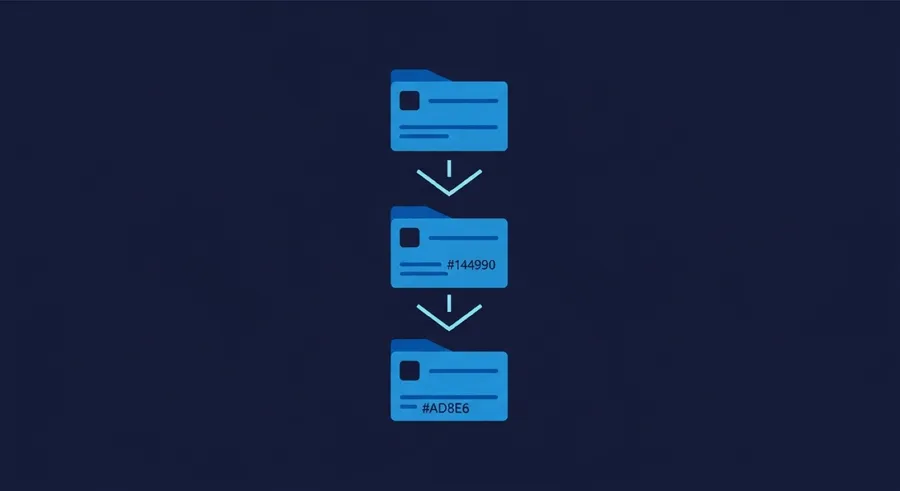
NAP consistency is one of those local SEO topics that sounds boring until your map-pack rankings quietly collapse and you can’t figure out why. Name, Address, Phone — three pieces of data that must match exactly across every place your business appears online. In 2026, the rules are unchanged but the surfaces have multiplied.
Moz’s Local Search Ranking Factors survey consistently lists citation signals — including NAP consistency — as a top-10 ranking factor for the Local Pack. BrightLocal’s citations research found 80% of consumers lose trust in a business with inconsistent NAP data. And Google’s own GBP guidelines require the exact business name shown on signage and listings.
This post covers what NAP consistency actually means, why it still matters as a ranking signal, the 5 most common ways it breaks, and a 20-minute audit you can run yourself.
Key Takeaways
- NAP consistency means your Name, Address, and Phone match exactly — not “similar,” identical — everywhere your business appears online.
- Citation signals including NAP consistency rank as a top-10 factor for the Local Pack, so inconsistency can quietly collapse your map-pack visibility.
- 80% of consumers lose trust in a business with inconsistent NAP data, making this a conversion issue as well as a ranking one.
- Google’s GBP guidelines require the exact business name shown on your signage and listings — no added keywords or abbreviations.
- The rules are unchanged in 2026, but the surfaces have multiplied; a 20-minute audit catches the five most common ways NAP breaks.
What NAP consistency means
Every mention of your business across the internet should use identical formatting for your Name, Address, and Phone. Not “similar.” Identical.
Name:
- If your legal name is “Digital Estate Media Ltd.” don’t list it as “Digital Estate Media” on one site and “DEM Marketing” on another.
- Pick one canonical name and use it everywhere. For most businesses that’s the trading name, not the legal entity name.
- Do NOT add keywords to the GBP name field (“Best Plumbing Toronto — Digital Estate Media”). Google considers this a violation and suspensions happen.
Address:
- Street number format:
123 Main Streetvs123 Main Stvs123 Main St.— pick one. - Unit number placement:
Unit 5, 123 Main Streetvs123 Main Street, Unit 5— pick one. - Province abbreviation:
OntariovsON— pick one. - Postal code spacing:
M5V 2A8vsM5V2A8— Canadian postal codes have a space in the middle; use it.
Phone:
+1 (888) 847-8809vs888-847-8809vs1-888-847-8809— pick one.- Whatever format you pick on GBP is the format that goes everywhere.
- Don’t use a tracking number on GBP. Tracking numbers for attribution belong on your website as dynamic number insertion, but the GBP number must match the real business line.
Why it’s a ranking signal
Google resolves the identity of a business by cross-referencing citations. Every site that mentions your business — Yelp, Yellow Pages, industry directories, local blogs — is a “citation,” and Google uses the consistency (or inconsistency) of those citations to decide how much to trust your business profile.
If 40 sites say Digital Estate Media, 123 Main St, Mississauga, ON, (888) 847-8809 and 10 sites say DEM Marketing, 125 Main Street, Mississauga, Ontario, 888-847-8809, Google is uncertain which is the canonical record. That uncertainty shows up as lower map-pack visibility and weaker knowledge-panel results.
The flip side: a business with tight NAP consistency across 50+ citations will routinely outrank a competitor with more reviews but inconsistent NAP.
The 5 most common ways NAP breaks
After auditing dozens of Ontario businesses, these are the five patterns that keep showing up:
1. A website redesign with a new header phone number
The most common breaker. New website ships with phone number formatted differently (or using a tracking number), and no one updates the citations. GBP and the website disagree from day one.
2. Unit/suite number inconsistency
A business moves into a multi-tenant building and starts with “123 Main St, Suite 500.” Over time, different sites record it as “123 Main St #500,” “500-123 Main St,” and “123 Main St, Ste 500.” Google sees three different addresses.
3. DBA (trading name) drift
The legal entity is “Sharma Marketing Inc.” The brand is “Digital Estate Media.” Some citations use one, some use the other. Pick one canonical — almost always the trading name — and update everything else.
4. Tracking phone numbers leaking into citations
A business enables dynamic number insertion on their website (swapping the displayed number based on traffic source). The tracking number gets scraped into a citation. Now one random site shows a different phone than GBP. Even one rogue tracking number in a citation is enough to cause trust issues.
5. Area code changes
The Greater Toronto Area added area code 365 in 2024, and businesses that moved from 905 to 365 often have inconsistent listings — some with old 905 numbers still live.
The 20-minute audit
Do this quarterly. It takes less time than you think.
Step 1: Establish canonical NAP
Write down the exact format you want everywhere. Put it in a Google Doc, share with every team member. This is now your canonical record.
Step 2: Check the Big Four
Confirm exact match on:
- Google Business Profile — your source of truth.
- Bing Places — Microsoft equivalent of GBP.
- Apple Maps / Apple Business Connect — matters increasingly as Apple Intelligence rolls out.
- Yelp — still has meaningful citation weight in Canada.
Step 3: Check your website
Every page that displays contact info (header, footer, contact page, About page, location pages) must match canonical NAP.
Step 4: Audit citations
Use a tool: Moz Local (CAD $200/year), Yext (higher enterprise pricing), or BrightLocal (CAD $40–$100/month). For a one-off audit, Whitespark’s free citation finder works.
Tools surface every citation where you appear and flag inconsistencies. Fix the worst 10–20 manually. For the rest, tools like Moz Local push updates to dozens of citation sources automatically for a fee.
Step 5: Structured data check
Your website’s LocalBusiness or ProfessionalService schema must also match canonical NAP. Go to validator.schema.org, paste your homepage URL, and eyeball the values. See Schema Markup That AI Search Engines Actually Cite for the full schema approach.
Step 6: Set a recurring reminder
Quarterly check. 20 minutes. This is the kind of maintenance that compounds — small problems caught early, rather than six months of quietly degrading rankings.
What DEM does
We run NAP audits on every new client engagement and re-audit quarterly. Canonical NAP goes in the client’s shared drive, every team member references it. Every citation update goes through a single workflow so the canonical record stays canonical.
Where this fits
NAP consistency is a foundational local-SEO item — it’s the #3 item in our Google Business Profile Optimization 2026 Checklist and sits underneath the broader work in the Local SEO Checklist for Mississauga.
If you want us to run a full citation audit and clean up your NAP across the 40+ sources that matter, that’s included in every Local SEO engagement.
Where this fits
This sits inside the local SEO cluster alongside the Local SEO Mississauga Guide 2026, Local SEO vs National SEO in Canada, Getting Reviews Without Asking, SEO Company Brampton Guide, and the Google Business Profile Optimization 2026 Checklist.
Sources
- Moz — Local Search Ranking Factors — accessed 2026-05-22
- BrightLocal — Local Citations, Trust and Search Engine Ranking — accessed 2026-05-22
- Google Business Profile Help — Guidelines for representing your business — accessed 2026-05-22
- Whitespark — Local Search Ranking Factors — accessed 2026-05-22
- Schema.org — LocalBusiness — accessed 2026-05-22