· By Salman Habib Chaudhry · SEO · 7 min read
SEO in the Age of AI: What Changed and What Still Works
Google AI Overviews, ChatGPT search, and Perplexity reshuffled how people find information. Here's what changed in 2026 — and the fundamentals that still drive rankings.

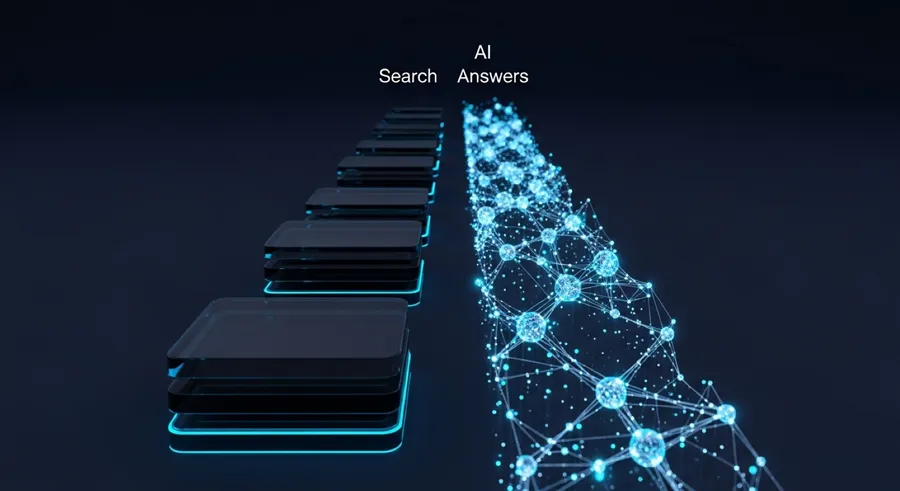
The search landscape has changed more in the last 18 months than in the previous decade. Google’s AI Overviews now appear at the top of search results for millions of queries. Users are increasingly turning to ChatGPT and Perplexity for research. Zero-click searches are at an all-time high.
Does this mean SEO is dead? Absolutely not. But it does mean the rules have changed.
For Ontario businesses, the practical question isn’t “is SEO worth it anymore” — it’s “where does my effort go now that some of the old tactics stopped working.” The answer turns out to be reassuring for anyone who was already doing things right: the work that builds a real business reputation online is exactly the work that wins in the AI era. The shortcuts died; the fundamentals got more valuable. Below is what actually shifted and what to keep doing.
Key Takeaways
- Search has changed more in 18 months than the previous decade — AI Overviews top millions of queries and zero-click searches are at an all-time high.
- SEO isn’t dead, but the rules changed: the shortcuts died and the fundamentals got more valuable.
- The work that builds a real online reputation — quality content, authority, technical health — is exactly what wins in the AI era.
- For Ontario businesses the question shifted from “is SEO worth it” to “where does my effort go now that some old tactics stopped working.”
- Anyone already doing SEO right is well-positioned; the change rewards substance over tricks.
What Changed
Thin content that simply targets keywords no longer ranks. Google’s AI systems can now understand context, intent, and expertise at a level that wasn’t possible two years ago. Content that doesn’t demonstrate genuine experience, expertise, authority, and trustworthiness (E-E-A-T, per Google’s helpful-content guidance) simply won’t rank for competitive terms.
The clearest casualty has been the “SEO content” of the 2010s: 500-word posts written purely to hit a keyword, padded with synonyms, and signed by no one. Pages like that have lost rankings across the board. What replaced them isn’t longer-for-the-sake-of-longer content — it’s content that answers the question better than the alternatives and shows it was written by someone who actually knows the subject. A Mississauga accountant writing about Ontario tax deadlines from real client experience will out-rank a generic article that could have been written about anywhere by anyone.
There’s also a measurement shift that catches businesses off guard. When AI Overviews answer a query directly, your impressions can stay high while your clicks fall — you’re being shown, but the user got their answer without visiting. The right response isn’t to panic about traffic loss on informational queries; it’s to make sure you’re the source being summarized, and to focus your conversion-driving effort on the commercial queries where AI Overviews are rarer and a real click is still on the table.
Three other shifts matter:
- Buyers are starting research outside Google. ChatGPT, Perplexity, and Claude now answer “best X in Y” questions before users ever hit a SERP. Earning citations there is the new top-of-funnel — see how to rank in ChatGPT and Perplexity SEO.
- Structured data carries more weight. Schema markup isn’t a direct ranking factor, but it’s how AI engines decide what to lift. The exact schema types AI engines cite are covered in Schema Markup That AI Search Engines Actually Cite.
- AEO and GEO emerged as practices. What Is AEO? covers the answer-engine surface; LLMO Explained covers the broader LLM channel.
What Still Works
The fundamentals haven’t changed. Technical SEO still matters enormously: site speed, Core Web Vitals, structured data, and crawlability are more important than ever, because AI systems can only cite content they can crawl and parse cleanly. Local SEO is extremely valuable for service businesses. And high-quality, genuinely helpful content still ranks; it just needs to be genuinely helpful, not keyword-stuffed filler.
If your foundation needs work first, that’s the brief our SEO service is built around. For the on-site changes that compound across both Google and AI search, see How to Optimize Your Site for AI Search.
What this means for a GTA business in practice
The theory is one thing; here’s how it plays out for a Mississauga or Toronto service company. Most local searches still have a Map Pack, and the Map Pack is largely untouched by AI Overviews — a search for “emergency electrician Oakville” still shows three local businesses with reviews and a call button. That’s commercial intent, and it’s where the money is. AI Overviews dominate informational queries like “how does a circuit breaker work,” which were never going to call your office anyway.
This is genuinely good news for local businesses. The queries most affected by AI Overviews are the ones least likely to produce a customer, while the queries that produce customers — someone in Brampton searching for a service they need now — still send a click and still favour local businesses. If anything, the AI shift has concentrated value into the local and commercial searches that service businesses were already best positioned to win.
So the strategy for a local business splits cleanly:
- For commercial and navigational queries (your services, your city), keep doing strong local SEO. Optimize your Google Business Profile, earn reviews, build local citations, and create a real page for each service-and-city combination. This is where local SEO for Mississauga earns its keep, and the Mississauga page is built around exactly this intent.
- For informational queries (the questions customers ask before they’re ready to buy), write to be cited. Lead with a clear answer, use FAQ structure, and back claims with specifics. The goal isn’t a click from that query; it’s to be the source the AI quotes, which builds the brand familiarity that pays off when the buyer is ready.
A short checklist for the AI era
If you do nothing else this quarter, do these:
- Fix technical health. Confirm your pages load fast, pass Core Web Vitals, and are crawlable. AI can’t cite what it can’t read.
- Add FAQ-structured content to your most important pages and emit FAQPage schema.
- Show real expertise. Attribute content to a named person, cite primary sources, and write from genuine experience.
- Lock down local signals. Consistent NAP, a complete GBP, and a steady stream of reviews.
- Audit your most-trafficked pages and rewrite anything thin or written-for-robots into something a person would actually find useful.
The encouraging part is that none of this is a gimmick that will stop working next year. Site speed, genuine expertise, accurate local information, and content that actually helps people are durable signals. Whatever the next change to Google or the AI engines looks like, a business built on those foundations adapts to it; a business built on tricks scrambles. That’s the real lesson of the last 18 months — the volatile tactics got punished, and the patient, fundamentals-first approach kept compounding.
The AI SEO Advantage
At Digital Estate Media, we use AI tools to research semantic clusters, identify content gaps, and improve technical performance at scale — work that would take a team weeks to do by hand. The tools accelerate the analysis, but the strategy and the editorial judgment are still human, because that’s what separates content that gets cited from content that gets filtered out. For a deeper look at how SEO, answer-engine optimization, and AI-search optimization fit together as one program, see SEO vs AEO vs GEO.
Ready to improve your organic visibility? Explore our AI SEO service.
Sources
- Google Blog — Generative AI in Search (AI Overviews) — Accessed 2026-05-22
- Google Search Central — Creating helpful, reliable, people-first content (E-E-A-T) — Accessed 2026-05-22
- Google Search Central — Core Web Vitals — Accessed 2026-05-22